
Connect every job from assignment to verified completion.
Manage service visits, installations, maintenance, engineers, subcontractors, forms, evidence and approvals through one connected operational platform. Validly gives office teams visibility over every job, gives field teams the information they need to complete work correctly and creates a traceable record from initial assignment through to customer sign-off and verified closure.
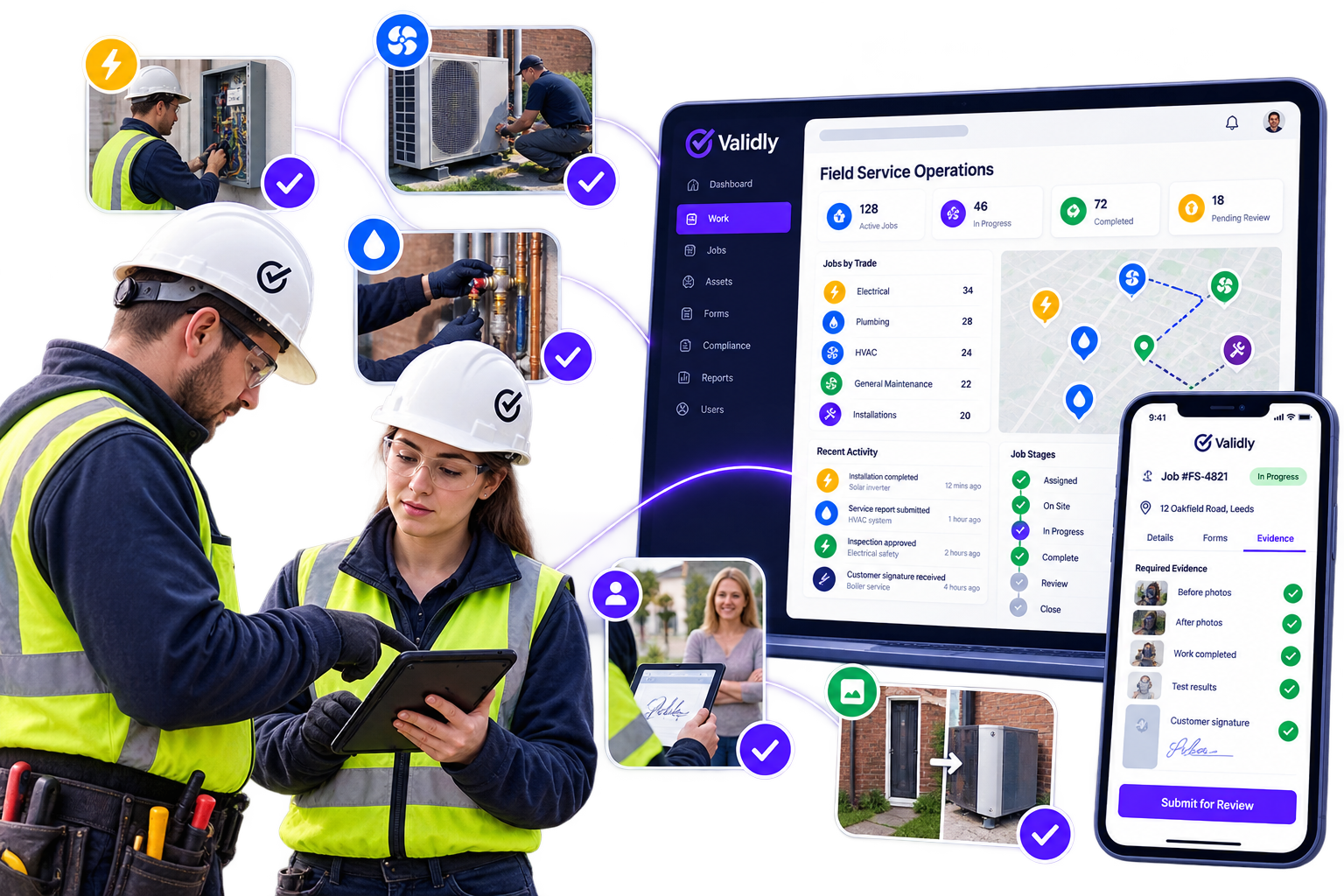
Create, schedule and assign structured work with clear instructions, documents, forms and completion requirements.
Give engineers and subcontractors everything they need to complete the job and capture the right information on site.
Review submitted evidence, resolve outstanding issues and maintain a complete record of what was completed.
Field service and trade businesses coordinate work across office teams, mobile engineers, subcontractors, customers and multiple locations. Job details may be managed through spreadsheets or scheduling systems, instructions sent through email or messaging applications, and completed job sheets, photographs and signatures returned separately. As job volumes increase, these disconnected processes create delays and administrative work throughout the service operation.
Engineers arrive without complete job information
Site details, customer information, previous notes, photographs, technical documents and work instructions may be distributed through different systems or messages.
Limited visibility once engineers leave the office
After work has been assigned, office teams may have limited visibility until the engineer provides an update or submits the completed paperwork.
Inconsistent job sheets and field records
Different engineers and subcontractors may record work in different ways, and important information such as measurements, parts used, photographs, notes or completion details can be incomplete.
Missing evidence delays job completion
Some activities require photographs, customer signatures, test results or supporting documents before the job can be considered complete, and when these are missing after the engineer has left, additional follow-up is required.
Repeat visits caused by incomplete work or information
An engineer may discover additional work is required, a part is unavailable or the original job information was incomplete, and without a structured follow-up process these jobs can move between spreadsheets, emails and scheduling systems.
Subcontractor work is difficult to standardise
Trade and service businesses often rely on subcontractors or specialist partners to support regional coverage or additional capacity, and each contractor may provide different levels of information and evidence.
Completed work still requires office administration
Engineers may finish the physical work but office teams still need to collect job sheets, photographs, signatures and notes before the activity can be closed.
Three connected Validly products give field service businesses one operational system linking work assignment, engineer activity, field information, evidence and verification.
Office teams create repeatable workflows for different service activities — new, scheduled, assigned, in progress, completed, review, approved, closed — with more complex work adding stages such as further work required, reassigned, remediation and review. Managers can see what is waiting to be scheduled, what has been assigned, what engineers are working on, what requires review and what remains open.
You need greater control over jobs, engineers, subcontractors, job status, follow-up activities and approvals.
Reduces manual job chasing and creates clearer ownership from initial assignment through to verified closure.
A recurring maintenance job is created and assigned to an engineer with asset information, previous notes, required checks and service forms. The engineer completes the activity, records findings, captures photographs and submits the job for review.
A customer issue creates a job that is assigned to the appropriate engineer. The engineer receives the fault information, attends site, records the diagnosis and work completed and captures supporting evidence. If further work is required, a follow-up activity is created.
An electrician receives the job specification, site information, required checks and supporting documents. Installation information, photographs, test records and customer confirmation are captured before submission.
Technicians complete scheduled servicing against customer equipment, with the service record capturing equipment information, readings, checks, photographs, findings and recommended follow-up work.
Jobs are assigned to subcontractors using the same work structure, forms and evidence requirements as internal teams, with submitted work reviewed before being accepted.
Once work is completed, the engineer records completion details and captures customer acknowledgement or signature where required, before the completed job and evidence become available to the office team for review.
See Validly on your field service sites.
A 30-minute walkthrough with your own job types and forms.